

Riflessioni su cosa significa “opera”
Durante una fiera d’arte ho incontrato un collezionista che – con un approccio spontaneo e disarmante – chiamava le opere “oggetti”. Non “quadro”, non “installazione”, ma semplicemente “oggetto”. In quel termine così apparentemente neutro ho riconosciuto una verità – sorprendentemente vera – per descrivere che cosa è un’opera d’arte: in prima battuta un oggetto materiale, e solo in un secondo momento qualcosa di maggiormente “opera”, ossia di senso, di relazione, di valore condiviso.
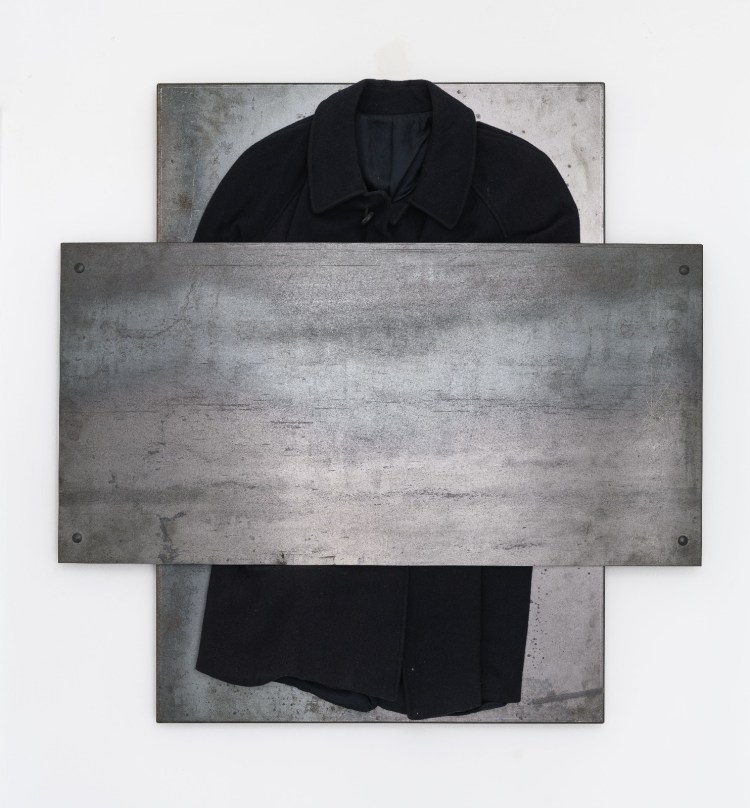
Tradizionalmente, siamo abituati a pensare all’opera d’arte come entità che trascende la mera materialità: è idea, emozione, segno. Eppure, ogni intervento artistico (che sia pittura, scultura, assemblaggio) prima è un oggetto — qualcosa che occupa spazio, che si confronta con la luce, l’ambiente, la fisicità. In questo senso, chiamare l’opera un “oggetto” non la sminuisce. Al contrario: riconosce che ogni opera “sta lì”, ha una presenza, una corporeità, un “essere-cosa” nel mondo.
Chi la crea – l’artista – sceglie materia, forma, colore, dimensione, collocazione: dà all’oggetto un senso, lo trasforma da materia neutra in oggetto-opera. Questo è il primo atto di valore: l’artista decide che quel frammento di materia diventi “qualcosa”. Ma l’oggetto non è completo finché non viene posto davanti ad un osservatore, a uno sguardo che lo interroga, lo abita, lo possiede, lo interpreta. Ed è qui che il secondo atto di valore prende forma: il collezionista, l’ammiratore, il visitatore lo raccoglie, lo guarda, gli assegna un significato o lo custodisce.
Così quell’“oggetto” non è più solo un oggetto: diventa opera d’arte, relazione tra materiali, visioni e sguardi. Chiamarlo “oggetto” significa riconoscere questa triade: materia → artista → osservatore/collezionista. In ogni passaggio, il senso – e spesso il valore – viene ridefinito.
Teoria e critica: “objecthood”, ontologia e arte
Dal punto di vista teorico, la questione non è nuova. La filosofia dell’arte – in particolare l’“ontologia dell’arte” – si interroga su «che tipo di cosa è un’opera d’arte?» Per alcuni versi, l’ipotesi più “naturale” è che opere come pitture o sculture siano oggetti materiali: una tela, una scultura in pietra. Tuttavia, questa posizione trova obiezioni: l’opera d’arte possiede proprietà estetiche, storiche e di significato che la semplice oggettualità materiale non spiega pienamente.
Nel mondo dell’arte contemporanea, in particolare nel movimento minimalista, la categoria di “objecthood” (ossia la qualità di essere oggetto) è diventata centrale. Come ricorda uno studio critico, “Minimalist art is all about objecthood; […] It’s seeing artworks as objects, as things located in space and time”. Il critico Michael Fried nel suo celebre saggio “Art and Objecthood” del 1967 mise in rilievo come, per alcuni artisti minimalistici, l’opera fosse soprattutto “presenza-oggetto” piuttosto che immagine o segno.
Da un lato, la materialità dell’oggetto rimane ineludibile: lo spettatore lo percepisce, ne occupa lo spazio, ne sperimenta la fisicità. Dall’altro lato, però, l’opera si allarga alla dimensione del significato, delle relazioni, della storia. Chi acquista o espone quell’oggetto partecipa a un processo che lo rende opera d’arte compiuta: non basta la materia, serve il contesto, lo sguardo, la critica, il collezionismo. In questo senso l’oggetto-opera si muove tra “cosa” e “significato”.
Per chiarire con esempi:
- Marcel Duchamp e i suoi “readymades” sono emblematici del passaggio oggetto → opera d’arte: un orinatoio ribaltato, scelto e firmato, diventa opera. L’oggetto quotidiano acquisisce senso e valore in virtù della scelta dell’artista e del contesto.
- Joseph Kosuth con la sua opera One and Three Chairs (1965) mette in scena una sedia (oggetto), la fotografia della sedia (oggetto) e la definizione da dizionario della sedia (testo). Qui l’oggetto fisico, l’immagine e il linguaggio si intrecciano per interrogare che cos’è un oggetto-opera e cosa significa “sedia”.
- Donald Judd (minimalismo) ha richiamato il concetto di opere come “specific objects” — entità che non sono né pitture né sculture tradizionali, ma oggetti in sé, che occupano spazio e tempo.
Questi esempi evidenziano come l’“oggetto” non sia mero contenitore o supporto, bensì parte integrante della riflessione sull’arte: l’artista sceglie un oggetto, lo trasforma, lo posiziona, e al contempo lo spettatore lo riceve.
Chiamare un’opera “oggetto” non è una riduzione, ma una scelta che riconosce tanto la concretezza quanto la potenzialità dell’arte. L’opera è prima un oggetto — materia, forma, spazio — e poi diventa opera, se l’artista la trasforma e lo spettatore la vive. In questo passaggio risiede la bellezza: l’incontro tra materia e significato. Per la galleria, per il collezionista, per l’ammiratore, è importante non dimenticare che un’opera d’arte vive nel mondo reale — ma vive attraverso relazioni, sguardi, contesti. Ogni oggetto-opera è un invito: a fermarsi, a guardare, a scegliere. E, infine, a costruire un significato che è unico per chi lo accoglie.



Reflections on what “Artwork” means
During an art fair, I met a collector who — with a spontaneous and disarming approach — referred to artworks simply as “objects.”
Not “painting,” not “installation,” but just object.
In that apparently neutral term, I found a surprisingly true definition of what an artwork is: first and foremost a material object, and only later something that becomes “artwork” — something of meaning, of relation, of shared value.
Traditionally, we are used to thinking of an artwork as something that transcends mere materiality: it is idea, emotion, sign.
And yet, every artistic intervention — whether painting, sculpture, or assemblage — is first an object: something that occupies space, that interacts with light, environment, and physical presence. In this sense, calling an artwork an “object” is not diminishing. On the contrary, it acknowledges that every work stands there, has a presence, a body, a being-thing in the world.
The one who creates it — the artist — chooses matter, form, color, dimension, placement: gives the object a sense, transforms neutral material into an object-work.
This is the first act of value: the artist decides that this fragment of matter should become “something.”
But the object is not complete until it is placed before an observer — a gaze that questions it, inhabits it, possesses it, interprets it.
Here the second act of value takes form: the collector, the admirer, the visitor receives it, observes it, assigns it meaning or keeps it close.
Thus, that “object” is no longer merely an object: it becomes an artwork — a relation among materials, visions, and gazes.
To call it an “object” means to recognize this triad: matter → artist → observer/collector.
At every passage, its meaning — and often its value — is redefined.
Theory and Criticism: Objecthood, Ontology, and Art
From a theoretical point of view, this question is not new.
The philosophy of art — particularly the ontology of art — asks: What kind of thing is an artwork?
In some ways, the most “natural” answer is that paintings or sculptures are material objects: a canvas, a stone sculpture.
However, this position faces objections: the artwork possesses aesthetic, historical, and semantic properties that its simple material objecthood cannot fully explain.
In contemporary art, particularly within the minimalist movement, the category of objecthood — the quality of being an object — became central.
As one critic wrote, “Minimalist art is all about objecthood; it’s seeing artworks as objects, as things located in space and time.”
Michael Fried, in his famous 1967 essay Art and Objecthood, pointed out that for many minimalist artists, the artwork was above all a presence-object, rather than an image or sign.
On one side, the materiality of the object is inescapable: the spectator perceives it, moves around it, experiences its physicality.
On the other, the artwork extends into meaning, relation, and history.
Whoever acquires or exhibits that object participates in a process that makes it a completed artwork: matter alone is not enough — it needs context, gaze, criticism, and collection.
In this sense, the object-work moves between “thing” and “meaning.”
- Marcel Duchamp and his readymades are emblematic of the passage from object → artwork: an overturned urinal, chosen and signed, becomes art. The everyday object gains meaning and value through the artist’s decision and the context.
- Joseph Kosuth, with One and Three Chairs (1965), stages a chair (object), a photograph of the chair (object), and the dictionary definition of “chair” (text). The physical object, the image, and language intertwine to question what an object-work is and what “chair” means.
- Donald Judd (Minimalism) proposed the idea of specific objects — entities that are neither paintings nor traditional sculptures, but objects in themselves, occupying space and time.
These examples reveal how the “object” is not a mere container or support but an integral part of the artistic reflection: the artist chooses, transforms, positions the object — and the spectator receives it.
To call an artwork an “object” is not a reduction but a recognition of both the concreteness and the potentiality of art.
An artwork is first an object — matter, form, space — and then becomes a work, if the artist transforms it and the spectator experiences it.
In this transition lies the beauty: the meeting of matter and meaning.
For galleries, collectors, and viewers alike, it is essential to remember that a work of art lives in the real world — but it lives through relationships, gazes, and contexts.
Every object-work is an invitation: to pause, to look, to choose — and finally, to build a meaning that is unique to the one who welcomes it.
 Luma Arte Contemporanea