
Entrare in via dell’Arancio 45 la sera del vernissage è stato come chiudere un cerchio che avevo immaginato per mesi. Non una mostra “appesa”, ma un incontro reale tra opere, gesti di cura e tempo condiviso. Quando ho spinto la porta di Olivìer – Estetica Sartoriale, ho visto la nicchia illuminata con l’opera Affresco di Shybuia, le schede sul tavolino, il logo sul vetro: tutto parlava già di All’Essenza. Arte, bellezza, tè.
Volevo che chi entrava sentisse subito che l’arte può vivere in spazi colloquiali e insoliti, senza perdere rigore.
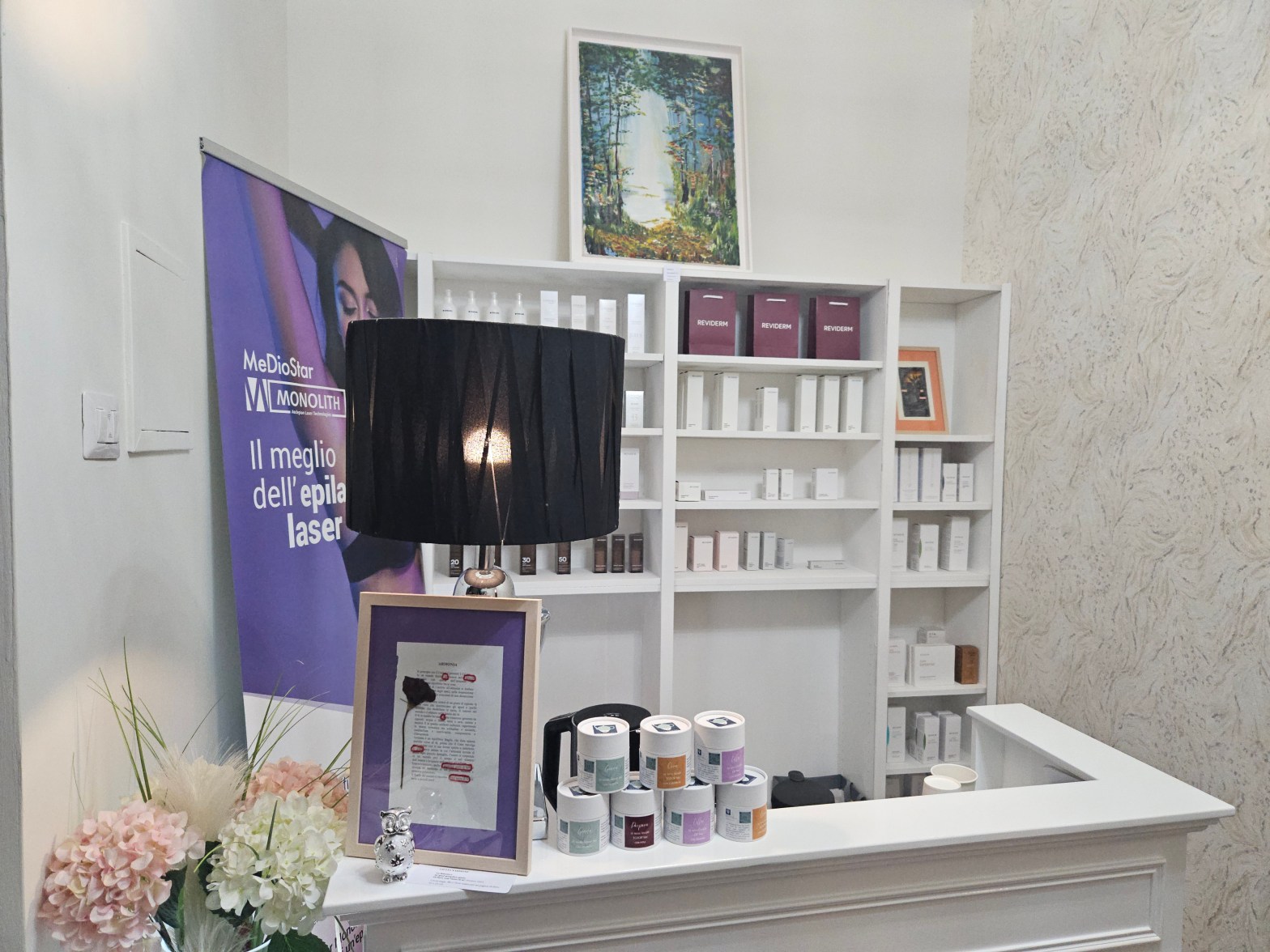
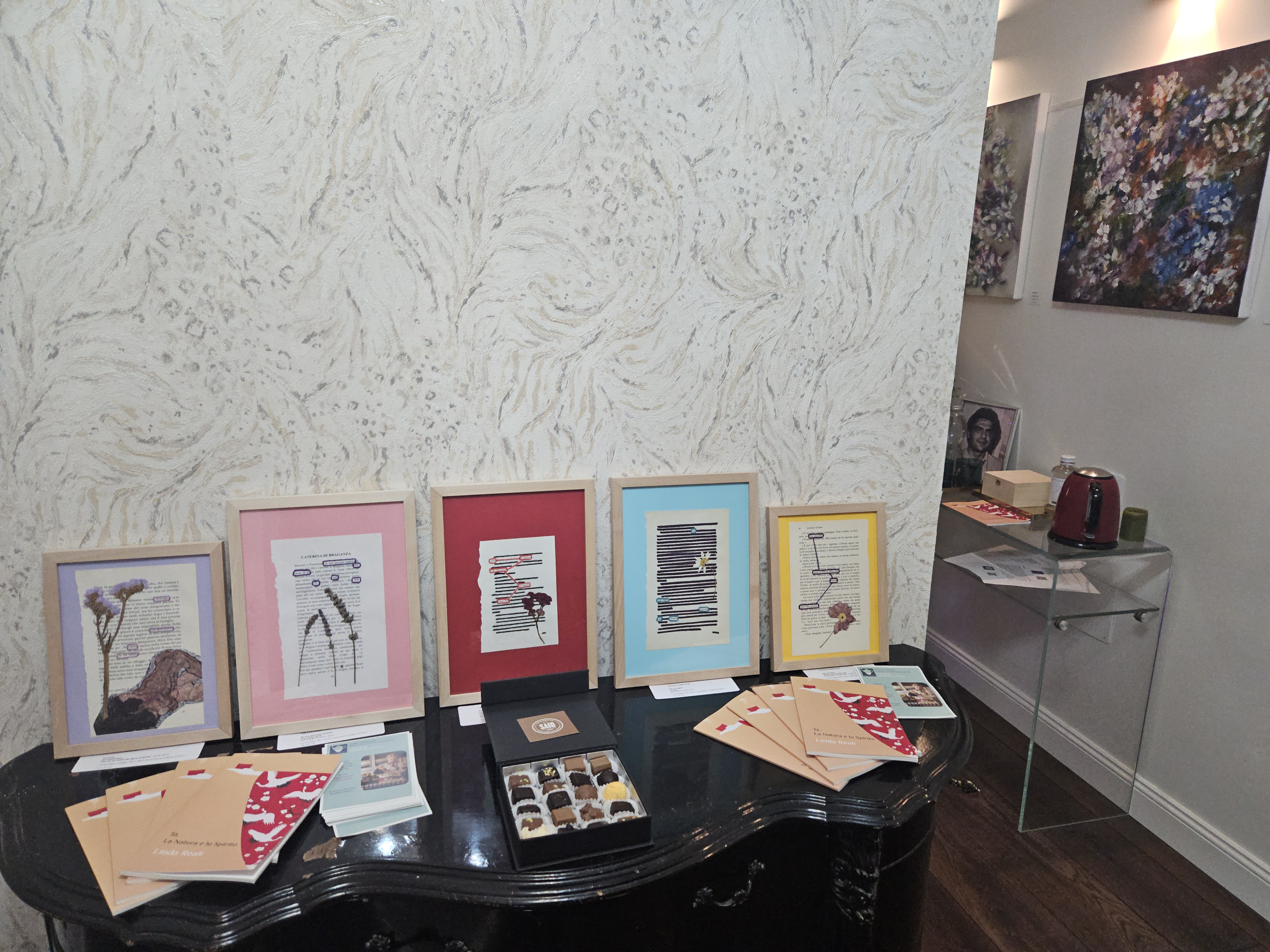
Nella sala principale, il cuore del progetto: i caviardage di Giulia Nardone, pagine scelte, parole rivelate, fiori pressati. Ogni cornice un timbro emotivo; ogni pagina un invito a leggere piano. A sinistra, altra tela di Shybuia, più ampia, con una luce interna che sembrava spostarsi mentre le guardavi. Dietro il bancone, gli scaffali con i prodotti: non un fondale, ma un promemoria che la cura del corpo è un linguaggio.
La degustazione di tè guidata da Linda Reali ha cambiato il ritmo della serata. Lavanda, rosa e fiordaliso per avvolgere il tè verde di lavorazione preziosa in una coccola aromatica che dona rilassamento e tonifica. Mentre Linda spiegava tempi d’infusione e origine, osservavo le persone tornare davanti alle opere con uno sguardo più concentrato. Molti mi hanno detto che dopo il sorso di lavanda notavano cromie e passaggi prima trascurati; con la rosa, invece, diventavano più sensibili alle parole emerse nei lavori di Giulia. È esattamente ciò che speravo: il tè come strumento di lettura.
Insieme a Oriana Picciolini, cicerone di Rome Art Week abbiamo messo in relazione Shybuia, Nardone e le due stampe dedicate a Hilma af Klint senza appesantire, offrendo coordinate e poi lasciando spazio. In quel dialogo si può riconoscere il nostro asse: femminilità, delicatezza, sensibilità non come etichette, ma come posture operative.
Patrizia Franconeri ha presentato i trattamenti viso e corpo e la logica dei prodotti. Volevo che chi ama l’arte capisse che c’è un’analogia con il lavoro in studio: protocollo, materia, manualità, pazienza. Molti hanno posto domande tecniche—pelli sensibili, routine, abbinamenti—con lo stesso tipo di curiosità con cui chiedono di tecnica e conservazione delle opere.
Sono uscita un momento davanti alla porta. Roma scorreva caotica con la sua luce di ottobre. Ho pensato a quanto è semplice, quando le cose si parlano: pittura, parola, tè, pelle. All’Essenza si è rivelato un formato che unisce professioni e sensibilità e che porta l’arte dove la vita accade.
Luana Hrom
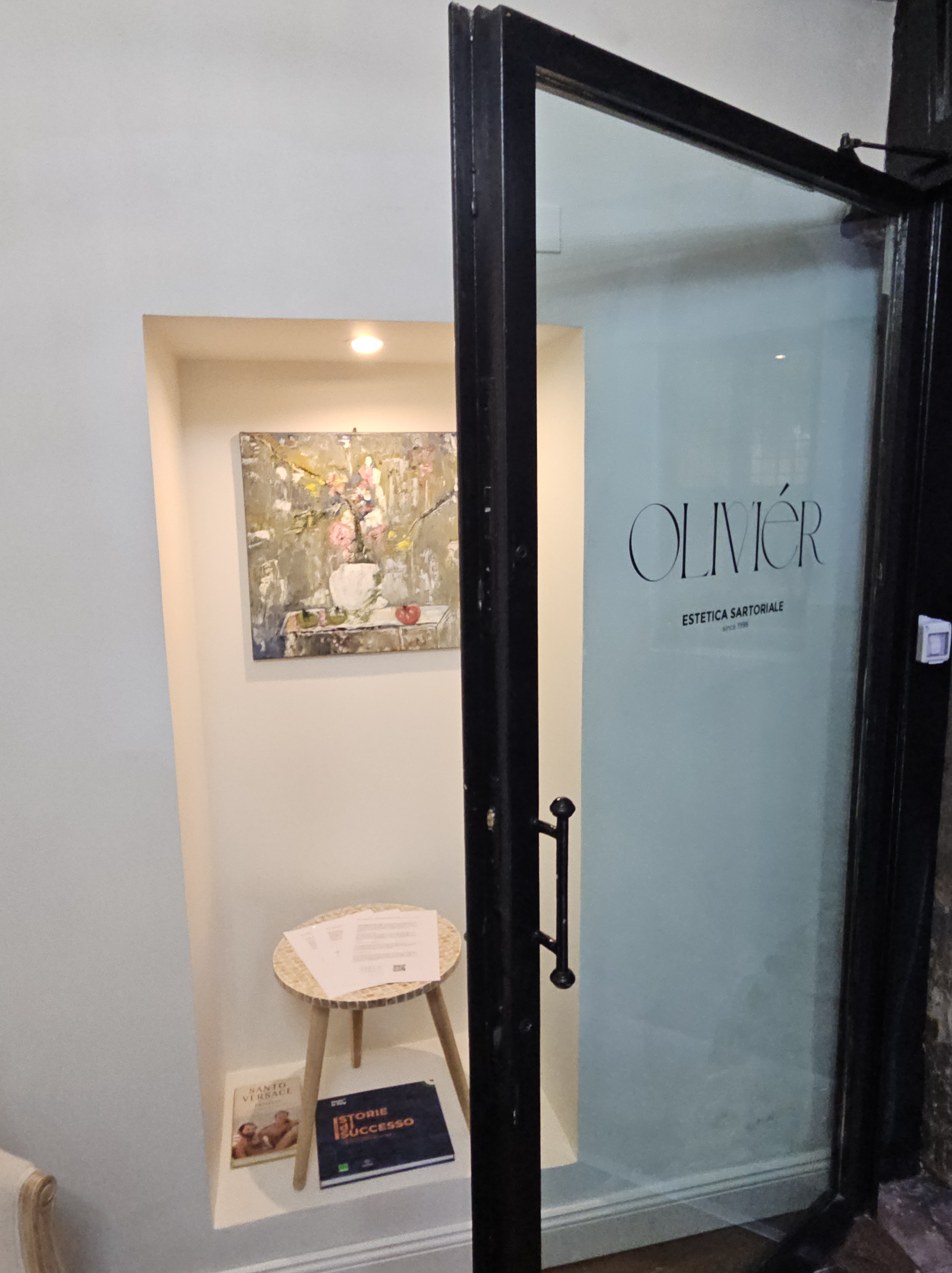




Walking into Via dell’Arancio 45 on the evening of the vernissage felt like closing a circle I had imagined for months. Not a show “hung on walls,” but a real encounter between artworks, gestures of care, and shared time. When I pushed open the door of Olivìer – Estetica Sartoriale, I saw the lit niche with Shybuia’s piece Affresco, the information cards on the small table, the logo on the glass: everything already spoke of All’Essenza. Art, Beauty, Tea.
I wanted anyone coming in to feel, right away, that art can live in conversational, unconventional spaces without losing rigor.
In the main room—the heart of the project—the caviardage works by Giulia Nardone: chosen pages, revealed words, pressed flowers. Each frame an emotional stamp; each page an invitation to read slowly. On the left, another, larger canvas by Shybuia, with an inner light that seemed to shift as you looked. Behind the counter, shelves of products: not a backdrop, but a reminder that care of the body is a language.
The tea tasting led by Linda Reali changed the tempo of the evening. Lavender, rose, and cornflower enveloped a finely crafted green tea in an aromatic embrace that relaxes and tones. As Linda explained infusion times and origin, I watched people return to the works with a more focused gaze. Many told me that after a sip of lavender they noticed color ranges and passages previously overlooked; with rose, they became more sensitive to the emerging words in Giulia’s pieces. It was exactly what I had hoped for: tea as a tool for reading.
Together with Oriana Picciolini, Rome Art Week’s cicerone, we connected Shybuia, Nardone, and the two prints dedicated to Hilma af Klint without weighing things down—offering coordinates, then stepping back. In that dialogue you can recognize our axis: femininity, delicacy, sensitivity not as labels but as working postures.
Patrizia Franconeri presented the face and body treatments and the logic behind the products. I wanted art lovers to understand the analogy with studio practice: protocol, material, manual skill, patience. Many asked technical questions—sensitive skin, routines, pairings—with the same kind of curiosity they bring to technique and conservation of artworks.
I stepped outside for a moment. Rome flowed by, chaotic, with that October light. I thought about how simple things become when they speak to each other: painting, text, tea, skin. All’Essenza revealed itself as a format that brings professions and sensibilities together and takes art to where life actually happens.
Luana Hrom
 Luma Arte Contemporanea