
The 2024 Venice Art Biennale was a fascinating and stimulating experience for us as art advisors at Luma Arte Contemporanea. Each edition of the Biennale offers a unique opportunity to observe the latest innovative trends in the international art scene, and this year was no exception. Among the many pavilions we visited, those of Poland and Egypt left a particularly deep impression on us.
The Polish Pavilion Experience: “Repeat After Me II”
From the moment we approached the Polish Pavilion, we were captivated by its intense and emotionally charged atmosphere. Titled “Repeat After Me II”, the project by the Open Group collective immersed us in the traumatic experiences of those forced to leave their homeland due to war. The ingenious choice of a “karaoke” format, where visitors could listen to and repeat evocative sounds from Ukrainian refugees, was truly striking. The simple act of “repeating” became a symbol of empathy and participation, building a bridge between those who lived the tragedy firsthand and those who, like us, were touched from afar.
Despite the complex subject matter, the pavilion never overwhelmed the viewer, instead inviting reflection and the sharing of these poignant stories. Rarely does an artwork engage so deeply on an emotional level, and it was impossible not to be moved by the delicate handling of such painful themes.
As gallerists working closely with collectors, this experience made us reflect on how even the most conceptual works can be profoundly accessible and understandable when executed with skill. The Polish Pavilion reminded us of the importance of supporting artists who address current, relevant issues, creating dialogue between the art world and the most urgent social and political questions.
Egyptian Pavilion: Drama 1882
Our journey through the 2024 Venice Art Biennale was further enriched by our visit to the Egyptian Pavilion, which particularly struck us for its ability to connect past and present through a meaningful, immersive experience. Artist Wael Shawky, with his project titled “Drama 1882”, presented a powerful narrative based on the Urabi Revolution (1879-1882), a crucial moment in Egyptian history. The film, shot in an open-air theater in Alexandria, intertwines historical facts with elements of fantasy and melody, all accompanied by monumental sets that evoke the spirit of resistance against British colonialism.
What stood out most in Shawky’s installation was his ability to link distant historical events to the current geopolitical tensions. As we watched the film, the work resonated with the events unfolding in the Middle East today, creating a bridge between different eras through the lens of historical memory and art. The sculptures, paintings, and scenic elements further deepened the experience, making it multisensory and immersive.
We were fascinated by Shawky’s skill in transforming history into contemporary art that not only narrates but invites the public to critically and engagingly reflect on national, religious, and artistic identities. This pavilion provided us with deep inspiration on how art can reinterpret the past to comment on the complexities of the present.
The work demonstrated how art can be more than just an aesthetic representation; it can also be a powerful tool for storytelling and social reflection, capable of transcending geographical and temporal boundaries.
Personal Reflection: Art as a Universal Language
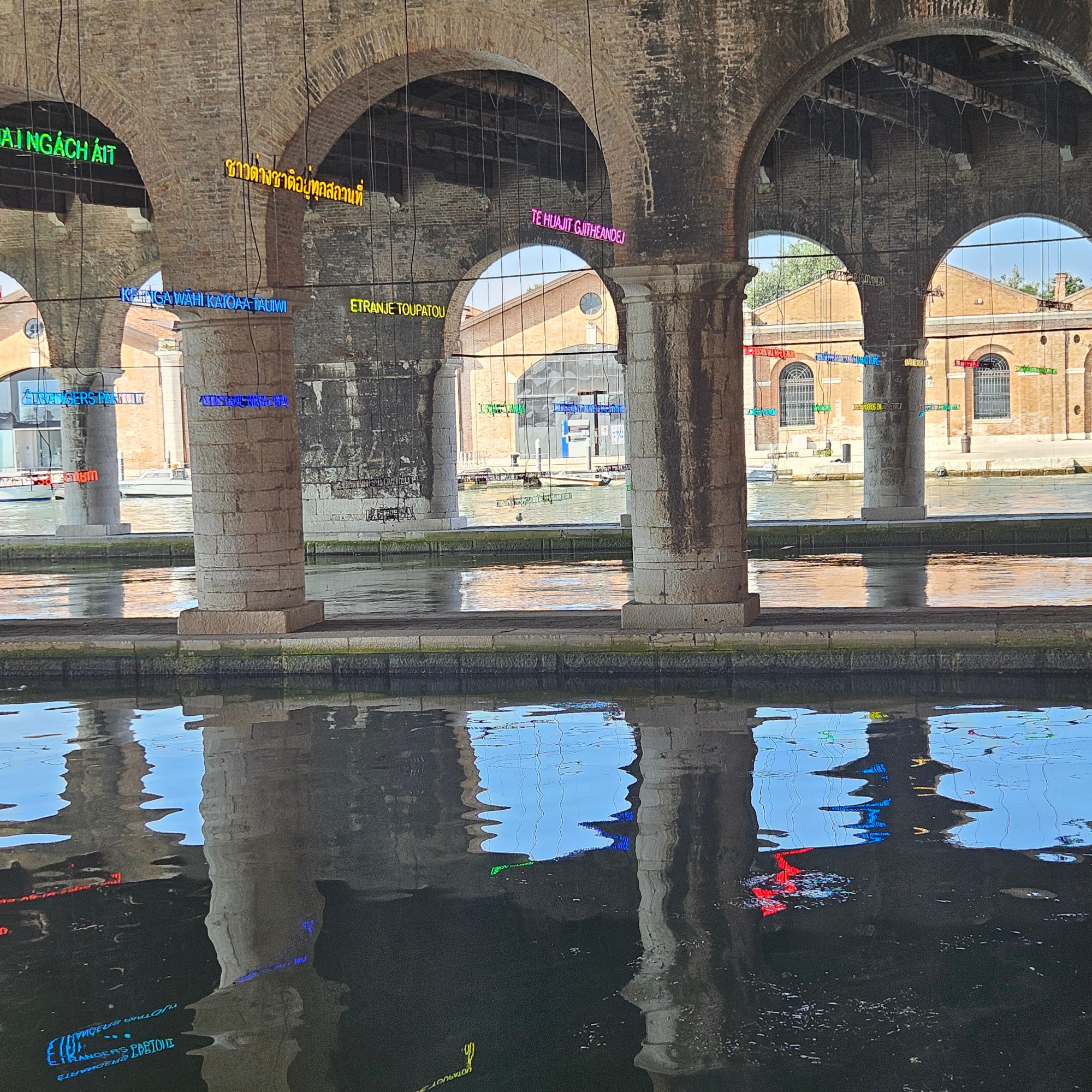
Visiting the Venice Biennale is never just a moment of aesthetic contemplation, but also a valuable opportunity to reflect on the directions contemporary art is taking. This year, with the theme “Foreigners Everywhere”, we were particularly touched by how art was used to explore issues of identity, migration, and displacement. Representing such complex themes in an understandable and engaging way is no easy task, but both the Polish and Egyptian pavilions showed us how artists succeeded in creating works with great emotional impact.
Our experience at the Biennale also gave us the opportunity to consider how we can support this kind of art in our collections and the exhibitions we curate. Many collectors often look for pieces that decorate and enrich spaces, but pavilions like these remind us how important it is to push art beyond the confines of beauty and aesthetics, to delve into the heart of the most pressing issues of our time.
Returning home, we carried with us a renewed sense of responsibility: art is not just a luxury commodity but a universal language that can, and must, be used to communicate ideas, emotions, and stories that transcend geographical and cultural boundaries. The 2024 Venice Art Biennale reminded us that art still has the power to surprise, move, and most importantly, make us reflect.




 Luma Arte Contemporanea